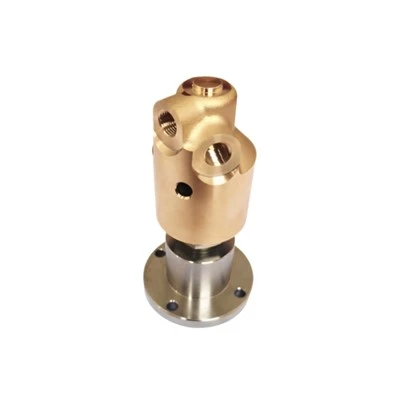
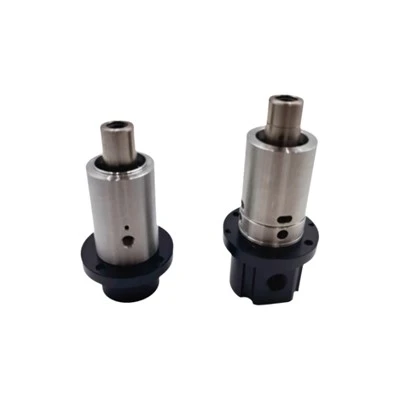
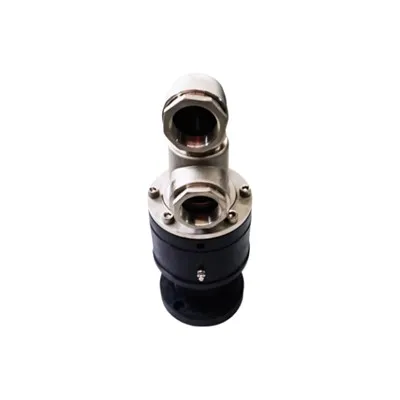
Rotary Joint

Reminder: The information on the page of each product is for marketing purposes only. Please contact our sales manager if you want to know the specific product details.


Company Profile


Shandong HanGe Sealing Technology Co., Ltd is affiliated with HanGe Group, which focuses on the "Rotation & Sealing" industry. The main products are Rotary Joints (Rotary Unions, Rotating Unions), Swivel Joints, Flexible Metal Hoses etc.
We have a professional import and export company (Shandong HanGe Import and Export Trade Co., Ltd) that imports seals for rotary joints and exports the rotary joints we produce all over the world.


Why Choose Us

One-stop Solution

We are committed to becoming a "supermarket" in the rotary joint industry, producing and supplying various types of rotary joints for different purposes. You can find any rotary joint you need and make a one-stop purchase.


High Quality

Steel industry, papermaking, packaging, plastics, printing and dyeing, rubber, chemical fiber, printing, aviation, glass, drying, cigarette, mining, electricity, petroleum, chemical, pharmaceutical, food, construction and other industries.

Production Equipment

Vertical Machining Center, CNC Lathe, Radial Drilling Machine, Grinding Machine, Hydraulic Press Machine.

Production Market

United States, Italy, Thailand, Bulgaria, Mexico, United Arab Emirates, South Africa, Russia, Iran, Chile etc.

 

First 1234567 Last 1/16

What Is Rotary Joint?


A rotary joint is the key component of any rotational radar system. It is an electro-mechanical device that provides the critical interface between the stationary and rotating sections of a radar system...
Rotary Joints is a key component in freely moving animal experiments. They have a fixed section (stator) that is connected to light source, electrical control box or fluid pump and a rotating section (rotor) that rotates freely or with torque assistance when required that remove the twisting effect of the optical fiber, electrical cables or fluid tubing connected to a freely moving animal.


Benefits of Rotary Joint


Fluid Transfer
Rotary joints enable the transfer of fluids such as water, steam, oil, coolant, air, and hydraulic fluids from stationary piping to rotating machinery components. This is essential for cooling, heating, or lubricating rotating parts.

Thermal Management
In industries where temperature control is critical, rotary joints are used to circulate heating or cooling fluids through rotating equipment, such as in the manufacturing of plastics, paper, textiles, and printing processes.

Industrial Machinery
Rotary joints are commonly found in various types of industrial machinery, including rotary tables, spindles, rollers, and rotating drums. They help maintain the functionality and efficiency of these machines by ensuring a continuous supply of necessary fluids.

High-Speed Applications
Rotary joints are designed to operate at high rotational speeds, making them suitable for applications in high-speed machining, centrifuges, and turbine systems.

Versatility
Rotary joints can handle a wide range of temperatures, pressures, and fluid types, making them versatile components in diverse industrial environments.


Type of Rotary Joint
 

Hydraulic Rotary union

A hydraulic rotary union is specifically designed to transfer both fluid media as well as numerous channel air pressure. Hydraulic rotary unions are designed for rotary apparatus and they can provide safe and stable transmission for multi-passage air pressure and fluid media. Rotary unions enable the transfer of fluid media even when rotating at 360 degrees.

Pneumatic Rotary Union

A Pneumatic Rotary joint is a rotary union which is designed to be operated by air or gas under extreme pressure, they are also able to be utilized for vacuum uses. Most people do not realize that most of the world around us and the way it works is largely based on pneumatics.
Pneumatic rotary unions can be found in applications such as a car wash or a drill head, with a car wash low-pressure water is fed through the supporting shaft of the rotary union into the brushes. Automatic car washes require rotary joints to transfer high-pressure water into the revolving brushes, thus cleaning the vehicle.

Fiber Optic Rotary Joint (FORJ)

A Fiber Optic Rotary Joint (FORJ) largely works in the same way for data and light signals, as a way of transferring considerable amounts of data in a short space of time across rotating parts.

Radio Frequency rotary joint (RF)

Radio Frequency Rotary Joints are the mechanical elements that are adopted to aid the transmission of radio frequency signals from a fixed part of a system to the parts which have the ability to move.


Materials Used in Rotary Joints


Sealing Materials
 

Sealing materials are critical components that ensure a leak-free connection within rotary joints. The choice of sealing material depends on factors such as media type, temperature, and pressure. Common sealing materials include:

Nitrile Rubber

Suitable for general-purpose applications, offering good resistance to oils and fuels.
Fluoroelastomers (Viton)

Resistant to high temperatures and various chemicals, making them ideal for demanding applications.
Polyurethane

Known for its flexibility and abrasion resistance, suitable for dynamic sealing applications.

旋转接头水

Housing Materials


水旋转接头

The housing materials of rotary joints contribute to their structural integrity and resistance to environmental factors. Considerations for durability, corrosion resistance, and weight play a role in selecting housing materials. Common options include:

Stainless Steel

Known for its corrosion resistance, stainless steel is often used in rotary joints exposed to harsh environments.
Aluminum

Lightweight and corrosion-resistant, aluminum is suitable for applications where weight is a crucial factor.
Brass

Combining durability and corrosion resistance, brass is chosen for its balance of strength and weight.


Applications of Rotary Joints
 
01/

Manufacturing
Rotary joints are used in manufacturing processes to transfer fluids such as water, oil, and steam. They are commonly used in rotary tables, milling machines, and other machinery that requires continuous fluid transfer.

02/

Automotive
Rotary joints are used in the automotive industry for applications such as brake systems, fuel systems, and air conditioning systems. They are also used in robotic arms for automotive assembly.

03/

Medical
Rotary joints are used in medical applications such as laparoscopes, endoscopes, ct scanner, and MRI machines. They are used to transfer fluids and gases in medical procedures and imaging systems.

04/

Radar
Rotary joints used within a radar system permit waves to be conveyed backwards and forwards from the fixed and revolving sections of the radar. During this transfer little to no signals can be lost. This makes rotary joints susceptible to use.


What Is The Difference Between A Rotary Joint And A Rotary Union?


A rotary joint is a type of mechanical device that allows for the transfer of energy or motion between two shafts that are not aligned. It typically consists of a series of gears, pulleys, or other mechanisms that allow for the rotation of one shaft to be transferred to another shaft at a different angle or orientation.

A Pneumatic Rotary Union, on the other hand, is a type of coupling device that allows for the transfer of fluids or gases between two rotating components. It typically consists of a series of seals and bearings that allow for the rotation of one component while maintaining a leak-free connection between the two components.


Operational Conditions
Duty Cycle: The frequency and duration of motor operation impact its lifespan. Continuous or high-duty cycle operations may lead to more rapid wear compared to intermittent use.
Load Characteristics: Motors subjected to heavy loads or frequent start-stop cycles may experience higher mechanical stress, potentially affecting their service life.
Environmental Factors: Exposure to extreme temperatures, dust, humidity, or corrosive substances can influence the longevity of a motor. Proper environmental protection and suitable operating conditions can extend its lifespan.


Maintenance Practices
Regular Inspections: Scheduled inspections and preventive maintenance measures can help identify potential issues early, allowing for timely repairs or adjustments to prolong motor life.
Lubrication: For motors requiring lubrication, adherence to proper lubrication schedules and practices is crucial for minimizing wear and ensuring smooth operation.
Alignment and Balancing: Correct alignment and balancing of motor components, particularly in high-speed applications, can prevent premature wear and extend motor life.


Design and Construction
Quality of Components: The quality of materials used, precision of manufacturing, and the robustness of the motor’s construction can influence its durability and expected lifespan.
Overload Protection: Motors equipped with effective overload protection mechanisms are less susceptible to damage from excessive current or torque, potentially extending their operational life.


Application-Specific Considerations
Industrial vs. Residential Use: Direct drive motors employed in industrial settings may be subject to harsher conditions and heavier loads compared to those used in residential appliances, impacting their respective lifespans differently.

Maintenance Practices: Adherence to recommended maintenance procedures, as well as prompt resolution of any identified issues, plays a critical role in ensuring the long-term performance and reliability of direct drive motors across various applications.


How Do Rotary Joint Work?
 

A rotary electrical joint, also known as a slip ring, is a component used to provide a continuous electrical connection between a stationary and a rotating structure. They are used in a wide variety of applications, including communications systems, medical equipment, industrial automation, and robotics.


A typical rotary joint consists of a stationary body, which houses the stationary electrical contacts, and a rotating assembly, which contains the rotating electrical contacts. The two pieces are connected by a series of springs and bearings to provide a low-friction connection, allowing the rotating assembly to turn freely.


The stationary contacts are connected to a power source or electrical circuit, while the rotating contacts are connected to the device or system to be powered. When the rotating assembly turns, the electrical contacts pass over each other, creating an electrical connection. This connection is maintained as long as the rotation continues, providing a continuous flow of electricity from the power source to the device or system.


Rotary joints can be designed for a variety of applications, including low voltage, high current, and high power. The size and shape of the electrical contacts, as well as the materials used to construct the rotary joint, will vary depending on the application. To ensure reliable operation, the contacts must be carefully designed and inspected, and the rotating assembly must be properly maintained.


Components of Rotary Joint
 

Body/Housing
The body of the rotary joints contains the fluid, holds pressure, and in some cases allows for hose connections. Also, it acts as torque restraint.

Shaft/Nipple/Rotor
The nipple is the primary connection to the machine. Nipple connection options include tapered thread, straight thread, or flanged.

Guide
Bearing bushings or guides transmit rotational force to keep the rotary joint aligned.

Seal
The seal is the main wearing part of a rotary joint. During operation, the seal experiences internal loading forces from fluid pressure, as well as friction from contact with the rotating nipple and the stationary housing. Factors related to the application, such as machine speed, temperature, and fluid effect seal life.

Assembly Plate
The assembly plate fits between the rotary joint head and body to secure internal parts when the head is removed. As assembly plate is typically optional.


Rotary Joint Installation and Maintenance
空气真空旋转接头
液压旋转接头
液压旋转接头
多通道旋转接头

Rotary joints have the potential to prevent catastrophic failures in a variety of machinery and other fixed installations when properly maintained. Properly-designed rotary joints have the potential to prevent failures by reducing the stresses placed on fixed equipment and component shafts by reducing the misalignment of rotating elements.


Additionally, the reduced stresses allow for a safer operating environment because the mechanical components are less likely to jam. Therefore, proper mechanical components, correct pipe fit, lubrication, and other important components must be carefully considered in the design of any system that requires efficient transmission of signals.


In addition, excessive heat may build up within the joint due to thermal oil buildup, causing it to fail at an inappropriate time. In all cases, failure of a rotary joint occurs when mechanical components fail to function as designed, leading to catastrophic failures.


Although rotary joints are susceptible to mechanical failures, they can also be affected by incorrect or improper installation, poor mechanical design, incorrect pipe designs, or poor piping joint fluid temperature.


In all cases, the most important thing to consider is a proper installation with the proper equipment, materials, and tools. For instance, if an anti-rotation rod is not properly installed with the flexible hose, the joint could fail while the anti-rotation rod itself fails to provide the proper support.


Many systems require anti-rotation rods that are installed with a flexible hose. Unfortunately, improper installation often leads to the failure of both the rotary joint and the anti-rotation rod. For this reason, pipe fitting and repair professionals utilize both a flexible hose and an anti-rotation rod when installing new pipelines. Proper installation is absolutely essential to the longevity and efficiency of the entire pipeline system.


Even the smallest mechanical components can fail at a moment’s notice. A small misalignment, vibration, or heat surge can easily cause data transmission problems in electrical power lines and power line panels. For example, when loose cabling in a power pole is the problem, the shortest path between the eyelet and the ground must be kept as tight as possible to reduce the chances of a short circuit.


Our Factory


Shandong HanGe Sealing Technology Co., Ltd is affiliated with HanGe Group, which focuses on the "Rotation & Sealing" industry. The main products are Rotary Joints (Rotary Unions, Rotating Unions), Swivel Joints, Flexible Metal Hoses etc.


productcate-1-1

productcate-1-1


FAQ


Q: What is a rotary joint?

A: A rotary joint, also referred to as a rotary union or rotating union, is a rotary sealing device that connects rotating equipment to fixed piping for the transfer of steam, water, thermal oil, coolant, hydraulic oil, air, and other media.

Q: What is the function of rotary joint for water?

A: Water rotary union serves as a vital component facilitating the transfer of water or other fluids between a stationary source and a rotating machine part. Their primary function is to prevent leaks and ensure a consistent flow of fluid, facilitating efficient cooling, lubrication, and various manufacturing processes.

Q: What is an example of a rotation joint?

A: Rotation can also occur at the ball-and-socket joints of the shoulder and hip. Here, the humerus and femur rotate around their long axis, which moves the anterior surface of the arm or thigh either toward or away from the midline of the body.

Q: What type of synovial joint is rotation?

A: Pivot joints allow for rotation around an axis, such as between the first and second cervical vertebrae, which allows for side-to-side rotation of the head. (b) The hinge joint of the elbow works like a door hinge.

Q: What is an example of a rotary joint?

A: Example is the joint in human head on the neck where rotating motion is possible. Other examples are those found in the forearms, knees and other parts of the skeletal system that are capable of rotating.

Q: What is the mechanism of rotary joint?

A: Rotary joints are mechanical sealing components used to transfer fluids from a stationary source into rotating cylinders of machinery. Rotary joints enable transfer of the fluids used to heat and cool.

Q: What is a rotational joint?

A: A rotational joint allows two 3-dimensional bodies to rotate relative to each other about a fixed axis and permits no other relative motion. It is, by far, the most common joint in robotic and other mechanical systems, and more complex linkages are often constructed by composing simple rotational joints.

Q: What is also called a rotary joint?

A: A rotary joint, also referred to as a rotary union or rotating union, is a rotary sealing device that connects rotating equipment to fixed piping for the transfer of steam, water, thermal oil, coolant, hydraulic oil, air, and other media.

Q: What is the difference between a rotary joint and a swivel joint?

A: Rotary joints are suitable for high-pressure and high-speed applications, and can transfer multiple fluids at the same time. In contrast, swivel unions can provide 360 degrees of rotation and are ideal for low pressure and slow to moderate rotation applications.

Q: What joint is also known as the rotary joint?

A: A rotary joint, also referred to as a rotary union or rotating union, is a rotary sealing device that connects rotating equipment to fixed piping for the transfer of steam, water, thermal oil, coolant, hydraulic oil, air, and other media.

Q: Where is rotary joint used?

A: Rotary joints are used in manufacturing processes to transfer fluids such as water, oil, and steam. They are commonly used in rotary tables, milling machines, and other machinery that requires continuous fluid transfer.

Q: Where is the rotating joint located?

A: Pivot joints allow rotation, and although you have many joints in your body, there are only three pivot joints. They are located in your neck, your wrist, and your elbow.

Q: What is the function of rotary joint for water?

A: Water rotary union serves as a vital component facilitating the transfer of water or other fluids between a stationary source and a rotating machine part. Their primary function is to prevent leaks and ensure a consistent flow of fluid, facilitating efficient cooling, lubrication, and various manufacturing processes.

Q: Which joint is known as rotary joint?

A: In pivot joint, a ring like structure formed by a bone and a ligament allows free movement of the linked bone. The pivot joint is also called as the rotary joint. Pivotal joints aid in side-way and back-forth movement. It is present in the neck and between the bones that rotate the forearm.

Q: How does a radar rotary joint work?

A: Rotary joints are used to transmit high-frequency energy from a fixed to a rotating part of the system (e.g., to the antenna). Within the joint, one uses either round waveguides or a short coaxial section in the waveguide system which is located in the center of the rotary joint.

Q: What is the difference between a rotary joint and a slip ring?

A: If it's a matter of transmitting electrical signals or power across rotational interfaces, slip rings are widely adopted. On the other hand, rotary joints cater to applications that demand the transmission of liquids, gases, or steam from stationary to rotating parts.

As one of the leading rotary joint manufacturers in China, we warmly welcome you to wholesale rotary joint made in China here from our factory. All customized products are with high quality and low price. For quotation, contact us now.

sustainable development for rotary joint, brochure of rotary joint, product catalog of rotary joint

(0/10)

clearall