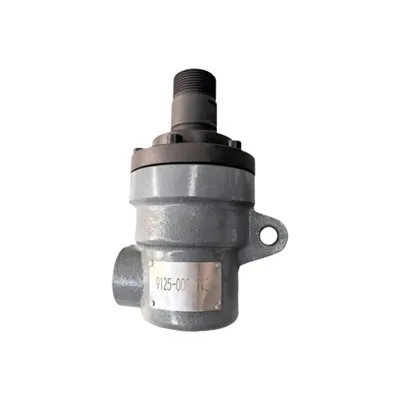
Rotary Joint for Steam

Reminder: The information on the page of each product is for marketing purposes only. Please contact our sales manager if you want to know the specific product details.


Company Profile


Shandong HanGe Sealing Technology Co., Ltd is affiliated with HanGe Group, which focuses on the "Rotation & Sealing" industry. The main products are Rotary Joints (Rotary Unions, Rotating Unions), Swivel Joints, Flexible Metal Hoses etc.
We have a professional import and export company (Shandong HanGe Import and Export Trade Co., Ltd) that imports seals for rotary joints and exports the rotary joints we produce all over the world.


Why Choose Us

One-stop Solution

We are committed to becoming a "supermarket" in the rotary joint industry, producing and supplying various types of rotary joints for different purposes. You can find any rotary joint you need and make a one-stop purchase.


High Quality

Steel industry, papermaking, packaging, plastics, printing and dyeing, rubber, chemical fiber, printing, aviation, glass, drying, cigarette, mining, electricity, petroleum, chemical, pharmaceutical, food, construction and other industries.

Production Equipment

Vertical Machining Center, CNC Lathe, Radial Drilling Machine, Grinding Machine, Hydraulic Press Machine.

Production Market

United States, Italy, Thailand, Bulgaria, Mexico, United Arab Emirates, South Africa, Russia, Iran, Chile etc.


First 12 Last 1/2

What Is Rotary Joint For Steam?


Rotary joint for steam are General-purpose unions suitable for Steam and condensate Services. These are of compact design, with a pair of ball bearings to maintain alignment of rotor. These are easy to replace and reparable on site. Available with Brass, Aluminium or carbon steel Housing and Carbon steel or stainless steel rotors.
Rotary joints for steam play a vital role in numerous industrial processes where steam is used as the medium.
Our unions provide efficient temperature regulation to maintain the stability of the rotary joint and enhance its performance.


Benefits of Rotary Joint For Steam
 

Key Components and Design

Rotary Joint For steams are made up of a few important parts that work together. Things like well-made seals, bearings, and sturdy housing are crucial to make sure steam doesn’t leak and the transfer happens smoothly. Picking the right materials for these parts is essential to handle the high temperatures and pressures often seen in steam applications.

Applications Across Industries

The great thing about rotary Joint For steam is that they’re super versatile, finding uses in many different industries. Whether it’s manufacturing, power generation, or making paper and textiles, these rotary unions help with tasks like drying, heating, and molding. They’re like the behind-the-scenes heroes, making sure machines keep working well.

Enhanced Efficiency in Manufacturing

In manufacturing, where precision and speed matter a lot,rotary Joint For steam come in handy. They help move steam to parts that rotate, making drying or heating materials faster and more efficient. This not only speeds up production but also improves the quality of the final products by making sure everything happens uniformly.

Power Generation Advancements

In power generation, a rotary Joint For steam is like an essential puzzle piece in turbines and generators. They make it possible to transfer steam to turbines that spin, turning thermal energy into the mechanical energy needed to generate power. Reliability is key here—these unions need to work well for electricity production to happen smoothly.


Type Of Rotary Joint For Steam


Fluid Rotary Joints
Hydraulic Rotary Joints: Used in hydraulic systems to transfer hydraulic fluid between rotating and stationary parts, commonly found in heavy machinery and industrial equipment.
Pneumatic Rotary Joints: Similar to hydraulic rotary joints but designed for the transfer of compressed air or gases, commonly used in pneumatic tools and automation systems.


Electrical Rotary Joints
Slip Rings: Used to transfer electrical power or signals across rotating and stationary parts. Common applications include rotating cameras, radar systems, and wind turbines.


Multi-Passage Rotary Joints
Multi-Channel Rotary Joints: Have multiple channels for the simultaneous transfer of different fluids or signals. These are often used in complex industrial machinery where multiple functions need to be performed simultaneously.


High-Speed Rotary Joints
High-Speed Air Bearings: Used in high-speed applications where low friction and minimal wear are critical, such as high-speed spindles in machining centers.


Fiber Optic Rotary Joints
Fiber Optic Rotary Joints: Transmit optical signals across rotating and stationary parts. They are commonly used in applications like military surveillance systems and medical imaging devices.


How to use Steam Rotary Joint?
 

It is an indisputable fact that rotary joints are not afraid of being used but afraid of not being used. Some enterprises have tight production arrangements. People stop the equipment but not the equipment. They run 24 hours a day. Although this will accelerate the wear of the equipment, it is a good thing for the use of rotary joints. Because the rust speed of the rotary joint will be slow if it is used continuously, and there is no chance for impurities to precipitate, so the rotary joint will have a longer life. On the contrary, if it is turned on and off, turned on for one day and stopped for two days, the impurities after the steam is cooled and the rust residue produced by the internal soaking of the rotary joint in water will cause damage to the seal.

In order to prevent the spherical surface of the rotary joint tube ball from rusting, the spherical surface of the steam rotary joint is made of stainless steel or the spherical surface is treated with special hardness. This will play a certain protective role against the wear and rust of the spherical surface of the rotary joint. Because all components of the steam rotary joint, except for the sealing ring and the support ring, are basically made of iron. Some, including springs, are made of iron. We use stainless steel or do hardness treatment to fundamentally solve this problem. But this is something that only rotary joint manufacturers can do. As a user of the rotary joint, more often you can only consider how to repair and maintain it on the existing basis. Try to maximize the service life of the swivel joint.

Steam Rotary Union

Rotary Steam Joint How Does it Work?


蒸汽旋转接头

Conventional steam rotary joints have a spring-loaded mechanical seal, which prevents the liquid or gaseous medium from dispersing into the atmosphere.

Spring pressure is used for achieving tightness in applications where there is low pressure or vacuum. In a typical rotary joint, the carbon is spring-pressed into a seal, silicon carbide, or any other hard metal.

Thus, you achieve a good, basic mechanical seal structure and a dynamic seal.

A balanced mechanical seal structure is generally used in rotary heads. The Balanced mechanical seal technology relies on the concept of optimizing the spring pressure to create a positive pressure inside the rotary head.

The working pressure of the fluid does not have any little effect on the spring pressure. A balanced mechanical seal is a flat-faced seal. Its swivel heads are supported by ball bearings.

The quality of a rotary joint depends on the quality of the mechanical seal inside. If the quality is poor, then it wears out faster. Thus, you will need more maintenance and downtime. Also, you will have to spend more money on repair costs. With higher repair and maintenance, downtime of the machine increases.


Rotary Joint For Steam User Concerns And Considerations


As users incorporate rotary Joint For steam into their systems, a spectrum of concerns and considerations arises. Each aspect plays a key role in the overall satisfaction with the performance and the cost-effectiveness of their investment. Addressing these facets head-on helps users make informed decisions and manage the lifecycle of the rotary Joint For steam more strategically.


Maintenance Requirements
Rotary Joint For steam typically demand regular maintenance to ensure their operational integrity. Maintenance routines might include periodic inspections, lubrication, and seal replacements. Users should follow the manufacturer’s maintenance schedule to ensure longevity, while also remaining vigilant for signs of wear or leaks, which could signal the need for preemptive maintenance. One vital tip for maintenance prolongation is to ensure that the medium being transferred is clean and free of any particulates that might cause abrasion or clogging within the joint.


Leakage and Sealing Solutions
Leakage remains one of the most common issues associated with rotary Joint For steam, often stemming from seal wear, improper installation, or even material degradation due to harsh media. Recognizing the challenges, there have been advancements in sealing technologies, such as the adoption of cartridge seals that offer simpler replacement procedures, or the use of more resilient materials suitable for extreme environments.


Compatibility and Integration
Ensuring compatibility with existing systems is critical to the successful integration of rotary Joint For steam. This includes compatibility with the media being transferred, the connection sizes, and the mechanical load capabilities. Incompatibilities can lead to joint failure, system inefficiencies, or even safety hazards.


What is the Role and Working Principle of the Rotary Joint For Steam in the Steam Kettle?
高速气动旋转接头
高温旋转接头
空气真空旋转接头
真空旋转接头

The rotary Joint For steam is a common mechanical device, which belongs to the high-temperature rotary joint series products. It is widely used in steam kettles, dryers, calciners, rotary kilns, ironing machines, heaters and other equipment; steam kettles are a common industrial equipment, widely used in food processing, chemical industry, medicine and other fields.


The rotary Joint For steam can connect and transfer heat energy in the steam kettle. As a common heating equipment, steam kettles are usually used to heat and cook food, pharmaceutical raw materials, leather fibers, and rotary Joint For steams transfer steam from the kettle to the outside to achieve the heating effect. It is mainly used to achieve unimpeded rotation between steam transfer and rotary connection. In the working process of the steam kettle, it is inevitable to involve the entry of steam and the discharge of condensate, and the rotary joint can allow steam to be continuously transferred and rotated during the operation of the equipment, and ensure the sealing performance while ensuring normal heating and smooth discharge of condensate, thereby affecting the heating effect, resulting in problems such as reduced product quality or efficiency, and ensuring the normal operation and production of the equipment.


The rotary Joint For steam uses a special structure and design to enable steam to be transmitted inside the rotary joint and remain stable and efficient. Generally speaking, it consists of a rotating shaft, a seal and a rotating mandrel. During operation, steam enters the rotary joint from the inlet, and through the design of the rotating shaft, the steam can be smoothly transferred to the part where steam needs to be transferred. At the same time, the seal plays an important role and can effectively prevent steam leakage. The rotating mandrel ensures the stability and flexibility of the entire joint, allowing the equipment to operate smoothly during the steam transmission process and to rotate and connect without hindrance.


In terms of working principle, the rotary Joint For steam usually consists of two rotating parts, the inner rotating part is connected to the steam kettle, and the outer rotating part is connected to the external equipment. Steam enters the rotary joint through the inner rotating part and is smoothly transmitted to the external equipment. The sealing structure inside the rotary joint can effectively prevent steam leakage and ensure the safety and stability of the system.


In addition, the rotary Joint For steam also has certain wear resistance and high temperature resistance. Since the working environment in the steam kettle is usually harsh, with high temperature and high pressure, the joint material and design must have good heat resistance and wear resistance. By adopting appropriate materials and structural design, the rotary Joint For steam can work stably for a long time in harsh environments, ensuring the normal operation of the equipment.


Our Factory


Shandong HanGe Sealing Technology Co., Ltd is affiliated with HanGe Group, which focuses on the "Rotation & Sealing" industry. The main products are Rotary Joints (Rotary Unions, Rotating Unions), Swivel Joints, Flexible Metal Hoses etc.


productcate-1-1

productcate-1-1


FAQ


Q: What is steam joint?

A: Steam heated rolls are used in the production process of many industries like Paper making, Petrochemical, Plastics, Rubber and Textile etc. One of the most common application is in paper making where the wet paper supported on felt passes over a steam-heated drying roll.

Q: What materials are rotary joints for steam made from?

A: They are often constructed from materials that can withstand high temperatures and pressures, such as cast iron, steel, or stainless steel. Sealing elements may be made from PTFE (Teflon), graphite, or metal alloys, depending on the operating conditions.

Q: What is a rotary steam joint?

A: A rotary joint, also referred to as a rotary union or rotating union, is a rotary sealing device that connects rotating equipment to fixed piping for the transfer of steam, water, thermal oil, coolant, hydraulic oil, air, and other media.

Q: How does a rotary joint work?

A: Rotary Unions, also called rotary unions or rotary joints, transfer fluid from a stationary supply into rotating machinery, such as a spinning drum heated by oil or chilled by water. Different types are used to match each set of requirements.

Q: What is a rotational joint?

A: A rotational joint allows two 3-dimensional bodies to rotate relative to each other about a fixed axis and permits no other relative motion. It is, by far, the most common joint in robotic and other mechanical systems, and more complex linkages are often constructed by composing simple rotational joints.

Q: What are the applications of rotary joint?

A: Rotary Joints & Unions are widely used in Textile, Paper, Food, Aluminium, Automotive,Cement, Leather, Plastics, Packaging, etc. Basically most of the rotary joint components are; -Shaft; which rotates with the rotating cylinder and carry medium into the drum or roll.

Q: How does a rotating joint work?

A: Function. A rotary union will lock onto an input valve while rotating to meet an outlet. During this time the liquid and/or gas will flow into the rotary union from its source and will be held within the device during its movement.

Q: What is the function of a swivel joint?

A: Swivel joints prevent kinks that form in hoses when one end of the hose rotates opposite the other end. Hose kinking reduces flow, increases system pressure, and causes fatigue of hose walls, crimps, and end connectors.

Q: Where are swivel joints used?

A: A few of the most typical applications include: loading arms, hose reels, steel mills, marine/dock hoses, firefighting equipment, machine tools, filtration equipment, wastewater treatment, aviation ground support equipment, tank trucks and drum fillers.

Q: How does a rotary steam joint work?

A: How do steam rotary joint work? Steam rotary joint or rotary union for steam uses precision-engineered seals, bearings, and robust housing to enable the seamless transfer of steam between fixed and rotating sections. They ensure uninterrupted operation without leaks.

Q: What is the working principle of rotary joint?

A: Seal theory of rotary joints “when pressure on the seal faces increases, it will result tighter and better sealing". But when force on the seal faces increases, friction between seal faces increases resulting higher torque for rotation. With Balanc

Q: What is the function of rotary joint for water?

A: Water rotary union serves as a vital component facilitating the transfer of water or other fluids between a stationary source and a rotating machine part. Their primary function is to prevent leaks and ensure a consistent flow of fluid, facilitating efficient cooling, lubrication, and various manufacturing processes.

Q: What is the best way for Steam?

A: Boil water on the stove and pour it into a bowl once it's steaming. Place a towel over your head and bend down toward the water for 5-10 minutes. Add essential oils or herbs to the water for aromatherapy, cold or stress relief, or to aid with sleep.

Q: What are the primary applications of rotary joints for steam?

A: Rotary joints for steam are utilized in industries such as textile, paper, and chemical processing, where steam is used for heating, drying, or providing power to rotating equipment.

Q: How is the size of a rotary joint for steam determined?

A: The size is chosen based on the steam flow requirements, pressure, temperature, and the rotational speed of the application. Proper sizing ensures adequate steam delivery and optimal performance of the equipment.

Q: What are the potential problems with rotary joints for steam, and how are they mitigated?

A: Common issues include wear and tear on seals, which can lead to leaks, and overheating due to poor heat dissipation. Regular inspections, maintenance, and replacement of worn parts are essential to prevent these problems.

Q: What are the standards and certifications applicable to rotary joints for steam?

A: Standards such as ASME (American Society of Mechanical Engineers) Boiler and Pressure Vessel Code are relevant, and certifications like ISO (International Organization for Standardization) may be sought to demonstrate compliance with international safety and quality guidelines.

Q: How is the performance of rotary joints for steam monitored?

A: Performance can be monitored through visual inspection, temperature and pressure sensors, and leak detection systems. Advanced diagnostics may use non-destructive testing methods and condition monitoring techniques.

As one of the leading rotary joint for steam manufacturers in China, we warmly welcome you to wholesale rotary joint for steam made in China here from our factory. All customized products are with high quality and low price. For quotation, contact us now.

steam rotary joint for curing processes, high temperature rotary union, high speed pneumatic rotary union

(0/10)

clearall