


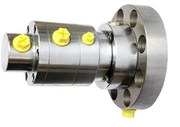
Rotary Joint For Rubber And Plastics Industry
During the operation of the vulcanizing machine, steam, hot water, hot oil and other heat media need to be delivered to the vulcanizing mold or other related components to provide the heat and pressure required for vulcanization. The function of the vulcanizing machine's dedicated rotary joint is to establish a reliable fluid connection between the fixed pipeline system and the rotating vulcanizing machine components, ensuring that the heat medium can be stably transmitted to the required parts while preventing medium leakage.
1. Structural Characteristics:
Good sealing performance: Multiple sealing methods are usually used in combination, such as mechanical seals, packing seals, etc., to ensure effective prevention of medium leakage under high temperature, high pressure, and rotating motion conditions. For example, some rotary joints are equipped with high-performance sealing rings and sealing rings inside, which can form a tight sealing interface between the rotating shaft and the housing.

Capable of withstanding high temperature and high pressure: During the vulcanization process, the temperature and pressure of the heat medium are usually high, so the rotary joint needs to have good high temperature and high pressure resistance performance. The material is generally selected from high-strength, high-temperature resistant alloy steel or stainless steel to ensure that deformation, damage or leakage will not occur under harsh working conditions.
Flexible rotation: In order to ensure the normal operation of the vulcanizing machine, the rotary joint needs to have a low friction coefficient and good rotational flexibility to reduce the load and wear on the vulcanizing machine power system. High precision bearings and lubrication systems are generally used to ensure that the rotating shaft can rotate smoothly inside the housing,
There are various connection methods: common connection methods include threaded connections, flange connections, etc., to facilitate connection with different types of vulcanizing machine pipeline systems and equipment components.

2. Common Types:
Hydraulic rotary joint: Suitable for vulcanizing machines that require the transmission of high-pressure liquid media such as hydraulic oil, it can withstand high pressure and flow, ensuring the stable operation of the hydraulic system.
High temperature rotary joint: specially designed for the transmission of high-temperature heat media, using special high-temperature resistant materials and sealing structures, capable of long-term stable operation in high-temperature environments, ensuring temperature control accuracy during the vulcanization process
Multi channel rotary joint: It can simultaneously transmit multiple different media, such as steam, hot water, hot oil, etc., or achieve bidirectional transmission of media, meeting the complex process requirements of vulcanizing machines.

3. Application Area:
Rubber vulcanizing machine: In the vulcanization process of rubber products, such as tires, rubber hoses, rubber seals, etc., the special rotating joint of the vulcanizing machine is used to deliver steam or hot water to the vulcanization mold, causing the rubber material to undergo vulcanization reaction under high temperature and high pressure, thereby obtaining good physical properties and chemical stability.
Plastic vulcanizing machine: For the vulcanization molding of some thermoplastic materials, such as plastic films, plastic pipes, etc., rotary joints also play an important role. They can provide the required heat and pressure for the vulcanization process, ensuring the quality and performance of plastic products.
Hot Tags: rotary joint for rubber and plastics industry, China rotary joint for rubber and plastics industry manufacturers, factory, efficient rotary joint, inspection of rotary joint, high performance rotary joint, warranty for rotary joint, production line accessories rotary joint, repair rotary joint




Send Inquiry
