

What are the steam quality requirements for a steam rotary joint?
May 29, 2026
Hey there! As a supplier of steam rotary joints, I've seen firsthand how crucial steam quality is for the smooth operation of these joints. In this blog, I'll break down the steam quality requirements that are essential for steam rotary joints, and I'll also share why getting these requirements right is so important.
Why Steam Quality Matters for Steam Rotary Joints
Steam rotary joints are used in a wide range of industrial applications, from paper mills to food processing plants. These joints allow steam to be transferred from a stationary source to a rotating component, like a drum or a roll. The quality of the steam that passes through these joints can have a huge impact on their performance and lifespan.
Poor steam quality can lead to a variety of problems, such as corrosion, erosion, and scaling inside the joint. These issues can cause leaks, reduce the efficiency of the steam system, and even lead to premature failure of the rotary joint. On the other hand, high - quality steam ensures smooth operation, minimizes maintenance requirements, and extends the life of the joint.
Key Steam Quality Requirements
1. Dryness Fraction
The dryness fraction of steam is a measure of the amount of water vapor in the steam relative to the total mass of the steam. In a steam rotary joint, it's important to have a high dryness fraction. Steam with a low dryness fraction contains a significant amount of liquid water, which can cause problems.
Liquid water in the steam can lead to water hammer, a phenomenon where the sudden change in the flow of water causes a shockwave. This can damage the rotary joint and other components in the steam system. Additionally, the liquid water can cause corrosion and erosion inside the joint. For most steam rotary joints, a dryness fraction of at least 0.95 is recommended.
2. Purity
Steam purity is another critical factor. Impurities in the steam, such as dissolved solids, suspended particles, and gases, can have a negative impact on the performance of the steam rotary joint.
Dissolved solids can cause scaling inside the joint. When the steam evaporates, the dissolved solids are left behind and form a hard deposit on the internal surfaces of the joint. This scaling can restrict the flow of steam, reduce the efficiency of the joint, and eventually lead to blockages.
Suspended particles can cause erosion of the internal components of the rotary joint. As the particles are carried by the steam, they can wear away the surfaces of the joint, leading to leaks and premature failure.
Gases, such as oxygen and carbon dioxide, can cause corrosion in the joint. Oxygen can react with the metal surfaces of the joint, forming rust and other corrosion products. Carbon dioxide can dissolve in the steam and form carbonic acid, which can also corrode the joint. To ensure purity, steam should be properly treated to remove impurities before it enters the rotary joint.

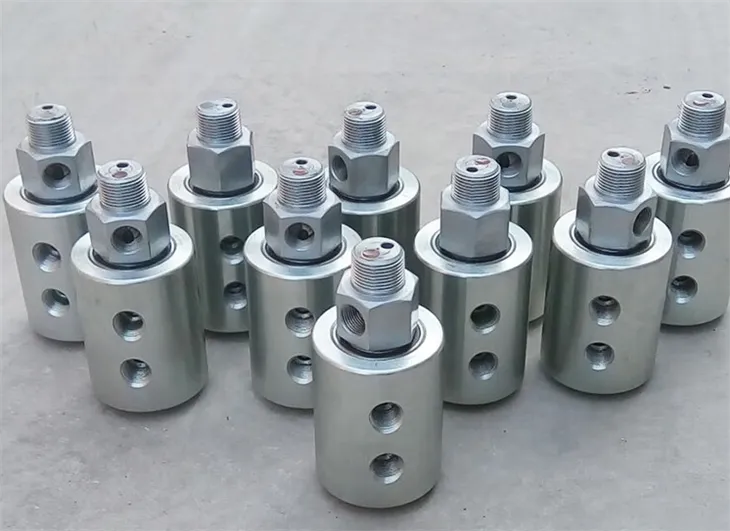
3. Pressure and Temperature
The pressure and temperature of the steam are also important considerations. Steam rotary joints are designed to operate within a specific range of pressure and temperature. If the steam pressure is too high, it can cause excessive stress on the joint, leading to leaks or even rupture. On the other hand, if the pressure is too low, the steam may not be able to perform its intended function effectively.
Similarly, the temperature of the steam should be within the recommended range. High - temperature steam can cause thermal expansion of the joint components, which can lead to misalignment and leaks. Low - temperature steam may not have enough energy to do the work required. It's essential to monitor and control the pressure and temperature of the steam to ensure optimal performance of the steam rotary joint.
How Our Steam Rotary Joints Are Designed to Handle High - Quality Steam
At our company, we understand the importance of steam quality for the performance of our steam rotary joints. That's why our joints are designed to handle high - quality steam effectively.
We use high - quality materials that are resistant to corrosion and erosion. Our joints are also engineered to withstand a wide range of pressure and temperature conditions. We have a strict quality control process in place to ensure that each joint meets the highest standards.
If you're looking for a reliable Steam Rotary Union, Vacuum Rotary Union, or Dual Flow Rotary Union, we've got you covered. Our products are designed to provide long - lasting performance and minimize maintenance requirements.
Conclusion
In conclusion, steam quality is a critical factor in the performance and lifespan of steam rotary joints. By ensuring that the steam has the right dryness fraction, purity, pressure, and temperature, you can maximize the efficiency of your steam system and extend the life of your rotary joint.
If you're in the market for a steam rotary joint, we'd love to talk to you. We have a team of experts who can help you choose the right joint for your specific application. Whether you need a standard joint or a custom - designed solution, we're here to assist you. So, don't hesitate to reach out and start a conversation about your steam rotary joint needs.
References
- ASME Boiler and Pressure Vessel Code
- Industrial Steam and Condensate Systems Handbook