

What are the flow rate requirements for a rotary joint?
Jun 03, 2026
Hey there! As a supplier of rotary joints, I often get asked about the flow rate requirements for these nifty devices. Rotary joints are essential components in many industrial applications, allowing for the transfer of fluids or gases between stationary and rotating parts. But getting the flow rate right is crucial for optimal performance. So, let's dive into what you need to know about flow rate requirements for rotary joints.
Understanding Flow Rate Basics
First off, what exactly is flow rate? In simple terms, flow rate is the volume of fluid or gas that passes through a given point in a specific amount of time. It's usually measured in units like gallons per minute (GPM) or liters per second (L/s). When it comes to rotary joints, the flow rate determines how much fluid or gas can be transferred smoothly and efficiently.
The flow rate requirements for a rotary joint depend on several factors. One of the most important is the application itself. Different industries and processes have different needs. For example, in a hydraulic system, the flow rate needs to be high enough to provide the necessary power for actuators and other components. On the other hand, in a cooling system, the flow rate should be sufficient to remove heat effectively.
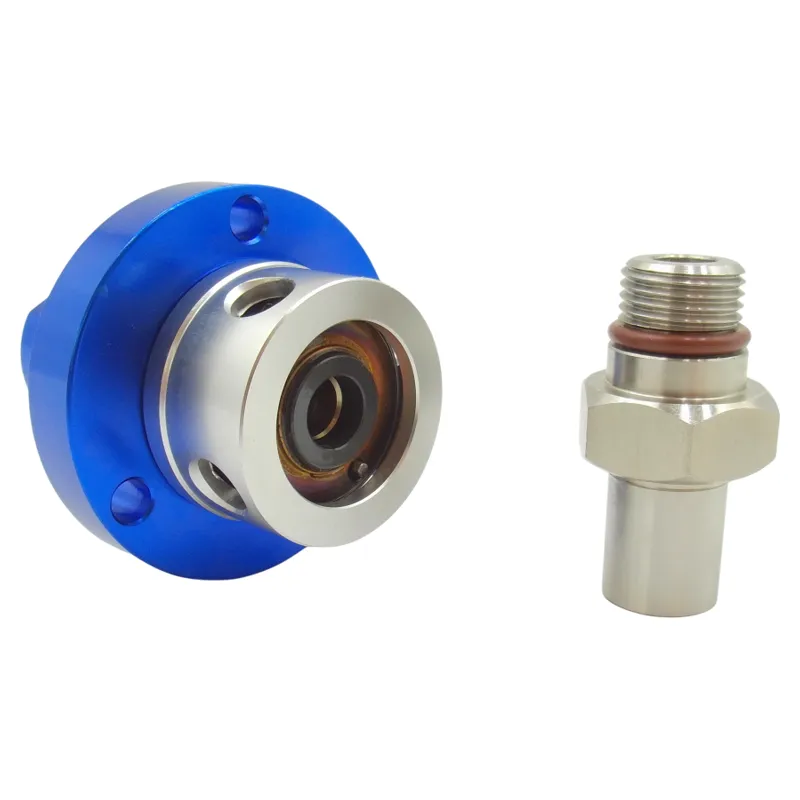

Factors Affecting Flow Rate Requirements
- System Pressure: The pressure in the system plays a big role in determining the flow rate. Higher pressures generally allow for higher flow rates, but the rotary joint must be able to handle the pressure without leaking or failing. For instance, in a high-pressure hydraulic system, the rotary joint needs to be designed to withstand the pressure while maintaining an appropriate flow rate.
- Fluid Viscosity: The thickness or viscosity of the fluid being transferred also affects the flow rate. Thicker fluids, like some oils, require more energy to flow through the rotary joint. This means that the flow rate might be lower compared to a thinner fluid, like water. So, when choosing a rotary joint, you need to consider the viscosity of the fluid to ensure it can handle the flow.
- Pipe Size and Length: The size and length of the pipes connected to the rotary joint can impact the flow rate. Larger pipes generally allow for higher flow rates, while longer pipes can cause more resistance, reducing the flow. It's important to match the pipe size and length to the rotary joint's capabilities to achieve the desired flow rate.
- Rotational Speed: The speed at which the rotary joint rotates can affect the flow rate. Higher rotational speeds can create more turbulence and resistance, which may reduce the flow. Some rotary joints are designed to handle high rotational speeds without sacrificing flow rate, but it's something to keep in mind.
Calculating Flow Rate Requirements
Calculating the flow rate requirements for a rotary joint can be a bit tricky, but it's essential for ensuring proper operation. Here's a basic formula you can use:
Flow Rate (Q) = Volume (V) / Time (t)
For example, if you need to transfer 100 liters of fluid in 5 minutes, the flow rate would be:
Q = 100 L / 5 min = 20 L/min
However, this is a simplified calculation. In real-world applications, you need to consider the factors mentioned above, such as pressure, viscosity, and pipe size. It's often a good idea to consult with an engineer or an expert in the field to get a more accurate calculation.
Our Rotary Joint Products and Flow Rate Capabilities
At our company, we offer a wide range of rotary joints to meet different flow rate requirements. Let me introduce you to some of our popular products.
The M-KT02020.03 Hydraulic Rotary Joint is designed for high-pressure hydraulic systems. It can handle a relatively high flow rate, making it suitable for applications where power and efficiency are crucial. Whether you're using it in a construction machine or an industrial press, this rotary joint can deliver the performance you need.
If you're looking for a rotary joint for water applications, our High-Temperature High-Speed Stainless Steel Water Rotary Joint is a great choice. It's made of high-quality stainless steel, which can withstand high temperatures and speeds. It also has a good flow rate, ensuring efficient water transfer in applications like cooling systems or water-powered machinery.
For coolant applications, we have the 1129-036-301 Aluminum Coolant Rotary Joint. This lightweight aluminum joint is designed to provide a reliable flow of coolant in various industrial processes. It's easy to install and maintain, and it can handle the flow rate requirements of most coolant systems.
Meeting Your Specific Flow Rate Needs
We understand that every customer has unique flow rate requirements. That's why we offer custom solutions to meet your specific needs. Our team of experts can work with you to determine the best rotary joint for your application, taking into account factors like flow rate, pressure, fluid type, and rotational speed.
Whether you're a small business or a large industrial corporation, we're here to help you find the right rotary joint. We can provide technical support, installation guidance, and after-sales service to ensure that your rotary joint performs at its best.
Let's Talk About Your Project
If you're in the market for a rotary joint and need help determining the flow rate requirements, don't hesitate to reach out. We're happy to have a chat with you about your project and provide you with the information you need. Whether you have questions about our products or need advice on choosing the right rotary joint, our team is ready to assist you.
So, if you're looking for a reliable rotary joint supplier, look no further. We're committed to providing high-quality products and excellent customer service. Contact us today to start the conversation and let's find the perfect rotary joint for your application.
References
- "Industrial Fluid Mechanics" by Robert W. Fox and Alan T. McDonald
- "Rotary Joint Handbook" by various industry experts