A Comprehensive Guide to Rotary Joints: Types, Applications, and Selection Criteria
Apr 28, 2025
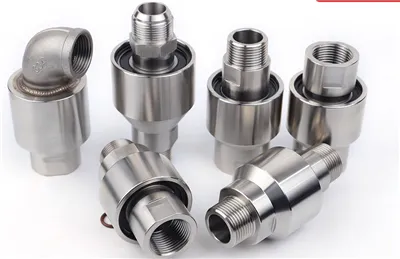
In industrial production, rotary joints are crucial components that enable stable transmission of media while equipment is rotating. Now, let's take a comprehensive look at the types, application scenarios, and selection methods of rotary joints.
I. Types of Rotary Joints
Single-channel Rotary Joint: It has only one medium channel and is usually used in simple working conditions where only one type of medium needs to be transmitted. For example, in some small heating rollers, steam or thermal oil enters the roller through a single-channel rotary joint to heat the materials.
Dual-channel Rotary Joint: It has two independent medium channels, which can transmit two different media simultaneously or allow the inlet and outlet of the medium to be at the same end. It is widely used in equipment such as drying cylinders in the paper-making industry. One channel admits steam for drying paper, and the other channel discharges condensed water.
Multi-channel Rotary Joint: It has three or more medium channels and is suitable for complex working conditions. For example, in some high-end automated equipment, it may be necessary to transmit multiple media such as gases, liquids, and electrical signals simultaneously, and a multi-channel rotary joint can meet these requirements well. 
II. Application Scenarios of Rotary Joints
Paper-making Industry: In various parts of paper-making machines, such as drying cylinders and calenders, rotary joints are used to transmit media such as steam and water to ensure the drying and forming quality of paper. For example, by precisely controlling the input of steam, the rotary joint can help the drying cylinder maintain an appropriate temperature, enabling the paper to dry quickly and evenly. 
Rubber and Plastics Industry: In rubber vulcanizers and plastic processing equipment, rotary joints are responsible for transmitting media such as thermal oil and hydraulic oil. During the rubber vulcanization process, thermal oil enters the mold through the rotary joint to provide the required heat for rubber vulcanization, ensuring the quality and performance of rubber products.
New Energy Battery Manufacturing Industry: In the production process of new energy batteries, especially in the manufacturing of lithium-ion batteries, rotary joints play a key role. In the electrode coating process, precise control of the transmission of the coating solution is required. The rotary joint can stably deliver the coating solution to the rotating coating roller to ensure the uniformity and accuracy of the coating. Moreover, in battery packaging and testing equipment, rotary joints are also used to transmit various gas and liquid media, such as inert gases used for detecting the airtightness of batteries. Since the new energy battery manufacturing has extremely high requirements for environmental cleanliness, rotary joints usually adopt ultra-high cleanliness materials and sealing technologies to prevent the contamination of battery products.
Semiconductor Chip Manufacturing Industry: Semiconductor chip manufacturing is a highly precise process, and rotary joints are indispensable in it. In the process equipment of chip manufacturing, such as lithography and etching, rotary joints are used to transmit ultra-pure gases, chemical reagents, etc. For example, in lithography equipment, ultra-pure protective gas needs to be delivered to the rotating wafer carrier through the rotary joint to protect the surface of the wafer from contamination. At the same time, during the etching process, the rotary joint can stably transmit the etching gas to ensure the accuracy and consistency of the etching process. In addition, due to the extremely high requirements for the stability and reliability of equipment in semiconductor manufacturing, the design and manufacture of rotary joints need to have extremely high precision and stability to meet the stringent requirements of chip manufacturing.
III. Selection Guidelines for Rotary Joints
Medium Type: First, it is necessary to clarify what the medium to be transmitted is. Different media have different requirements for the sealing materials and structures of rotary joints. For example, when transmitting corrosive media, it is necessary to select corrosion-resistant sealing materials and housing materials.
Working Pressure and Temperature: Determine the working pressure and temperature range that the rotary joint can withstand according to the actual working conditions. If the working pressure is too high or the temperature exceeds the range, it may lead to seal failure or damage to the rotary joint.
Rotational Speed: The rotational speed of the equipment is also one of the important factors in the selection. Equipment with high rotational speeds requires rotary joints with good dynamic balance performance to ensure the stability and reliability of operation.
Installation Method: Consider the installation space and method of the rotary joint, and select an appropriate connection form, such as threaded connection, flange connection, etc. Ensure that the installation is convenient and firm to avoid loosening or leakage during operation.
By understanding the types, application scenarios, and selection guidelines of rotary joints, it is believed that you will be more proficient in selecting and using rotary joints, providing a strong guarantee for the stable operation of industrial production. In practical applications, regular maintenance and upkeep of rotary joints should also be carried out to extend their service life.