


Hot Oil Rotary Joints
Hot Oil rotary joint are General-purpose unions suitable for Water and condensate Services. These are of compact design, with a pair of ball bearings to maintain alignment of rotor. Rotary joint for water service can be easily replace and repair on site.
Shandong HanGe Sealing Technology Co., Ltd is affiliated with HanGe Group, which focuses on the "Rotation & Sealing" industry. The main products are Rotary Joints (Rotary Unions, Rotating Unions), Swivel Joints, Flexible Metal Hoses etc.
We have a professional import and export company (Shandong HanGe Import and Export Trade Co., Ltd) that imports seals for rotary joints and exports the rotary joints we produce all over the world.
Why Choose Us
One-stop Solution
We are committed to becoming a "supermarket" in the rotary joint industry, producing and supplying various types of rotary joints for different purposes. You can find any rotary joint you need and make a one-stop purchase.
High Quality
Steel industry, papermaking, packaging, plastics, printing and dyeing, rubber, chemical fiber, printing, aviation, glass, drying, cigarette, mining, electricity, petroleum, chemical, pharmaceutical, food, construction and other industries.
Production Equipment
Vertical Machining Center, CNC Lathe, Radial Drilling Machine, Grinding Machine, Hydraulic Press Machine.
Production Market
United States, Italy, Thailand, Bulgaria, Mexico, United Arab Emirates, South Africa, Russia, Iran, Chile etc.

When selecting a rotary joint, the specific applicable model needs to be determined based on the requirements of the operating conditions.

The single-pass thermal oil rotary union represents a highly efficient and maintenance-friendly solution for applications requiring reliable transfer of heat-carrying fluids while accommodating rotational movement.
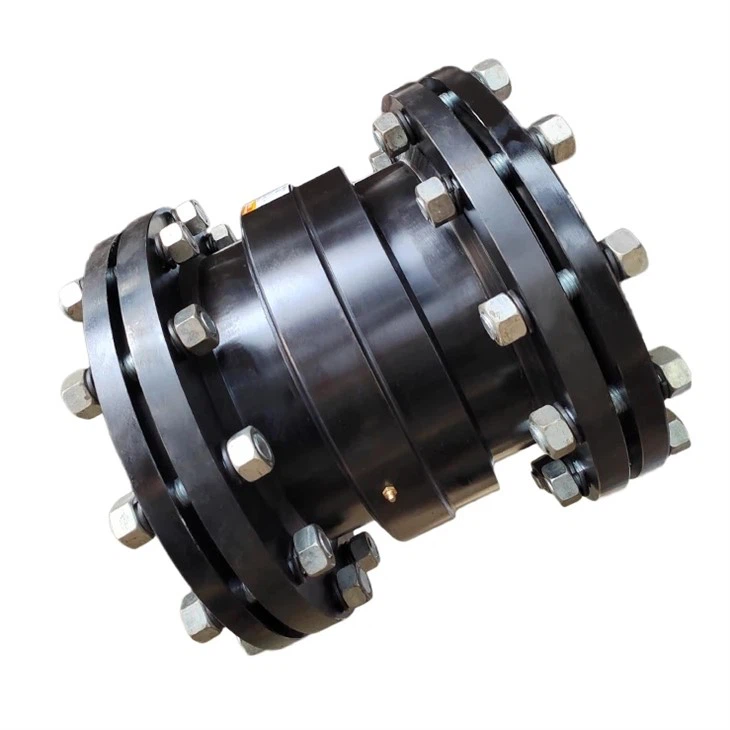
The selection of rotary joint materials suitable for high-temperature fluid transmission is a critical task, which directly affects the safety, efficiency, and service life of the equipment.
What Is Hot Oil Rotary Joints?
Hot Oil rotary joint are General-purpose unions suitable for Water and condensate Services. These are of compact design, with a pair of ball bearings to maintain alignment of rotor. Rotary joint for water service can be easily replace and repair on site. Available with Brass, Aluminium or carbon steel Housing and Carbon steel or stainless steel rotors.
hot oil rotary joint which is easily replaceable, repairable, serviceable of sealing components on machine system i.e. No need to disassemble the joint from the system. Just remove bolts on the end cap and separate end cap with hoses. Remove old rotary seal and floating seal group and replace them with new ones.
Benefits of Hot Oil Rotary Joints
They help make more stuff faster
With cool tech, hot oil rotary joints speed up how much we can make
01
Less stopping
They keep machines running without needing to stop and start again
02
They keep machines in good shape
Hot oil rotary joints help stop wear and tear by keeping things cool or oiled just right
03
They fit what you need
You can set up hot oil rotary joints to work just how you need them to
04
They make work more efficient
Hot oil rotary joints cut down on the time machines are not working and the care they need
05
High-Speed Rotary Union: These types of rotary unions are designed to handle high rotational speeds while maintaining a reliable and leak-free connection. They are commonly used in applications such as high-speed machining centers, spindle applications, and rotary index tables.
High-Pressure Rotary Union: High-pressure rotary unions are specifically designed to handle fluid pressures above the normal range. They are built with robust materials and seals to ensure the integrity of the connection under high-pressure conditions.
High-Temperature Rotary Union: These rotary unions are designed to withstand elevated temperatures. They incorporate special materials, seals, and cooling mechanisms to prevent overheating and maintain the efficiency of the fluid transfer.
Through-Bore Rotary Union: Through-bore rotary unions allow the passage of fluid, gases, air or electrical signals through the center of the joint. This type of rotary union is often used in applications where it is necessary to pass media or signals through a rotating structure, such as rotary tables or rotary indexers.
Hybrid Rotary Union: Hybrid rotary unions combine the functions of fluid transfer and electrical slip rings in a single device. They enable the transfer of both fluid media and electrical power or signals through a rotating joint.
Applications of Hot Oil Rotary Joints
Hot oil rotary joints find extensive applications across diverse industries, contributing to the seamless operation of rotating systems. Let's explore their roles in the manufacturing, automotive, aerospace, and marine sectors.
In the manufacturing industry, hot oil rotary joints play a crucial role in ensuring the efficiency of various processes. Applications include:
Metal Cutting: Used in machining centers to transfer coolant fluids for temperature control and chip evacuation.
Printing Presses: Facilitate the transfer of inks and solvents in high-speed printing processes.
Textile Machinery: Employed in dyeing and finishing processes to handle steam or hot water transfer.
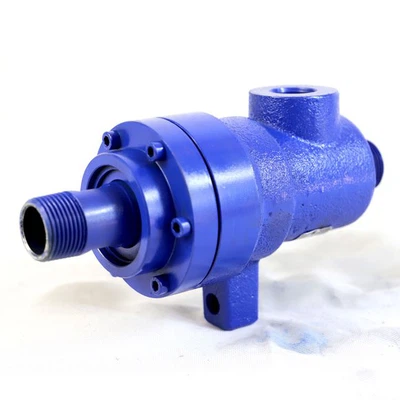
Automotive Industry
The automotive sector relies on hot oil rotary joints for various applications, contributing to the smooth operation of vehicles. Applications include:
Power Steering Systems: Hydraulic hot oil rotary joints assist in the transfer of hydraulic fluid for power steering.
Transmission Systems: Facilitate the transfer of hydraulic fluids for smooth gear shifts in automatic transmissions.
Engine Cooling: Used in coolant systems to transfer fluids for temperature regulation.
Principle of Hot Oil Rotary Joints
Hot oil rotary joints, as a seal for small pipe connection, is widely used in various hydraulic transmission machines. Its suitable working temperature range is usually -20℃~100℃; nominal pressure PN≤40MPa; its specifications are generally not large. Rotary joints used to transport seawater, fresh water, hot and cold water, drinking water, crude oil, fuel oil, gas and other steam and granular powder with a temperature not higher than 170℃ are mostly used in pipelines and pipeline devices in urban construction water supply systems, ships and petrochemical industries, and its specifications range is relatively wide.
The hot oil rotary joints has a conduit section connected to the upper end of the lifting pipe, or a part of the lifting pipe on the installation equipment. When the two rotating elements rotate in opposite directions to each other and rotate through an arc greater than 360°, when the rotary joint element rotates in one direction around the common axis, the conduit section leaves the lower element and is placed on the upper element. In this way, if the conduit is long enough and the two elements are large enough, the support can be rotated in one direction through an arc greater than 360°, and then the support can be reversed. This purpose can be achieved without traditional rotary joints, seals, etc.
Working Principle of Hot Oil Rotary Joint
The two ends of the shell are respectively fixedly connected with a tail cover with a liquid channel in the shell and an end cover with a hollow support in the middle. The outer tube is rotatably connected to the shell through two bearings, the outer end of the outer tube extends out of the end cover, and a sealing device is provided between the inner end of the outer tube and the tail cover. There are multiple heat dissipation holes on the shell between the two bearings. The heat dissipation holes are waist-shaped holes. The sealing device includes a static ring and multiple springs. The static ring is slidably fitted in the tail cover, and the end of the static ring is dynamically sealed with the inner end of the outer tube; multiple springs are installed between the end face of the tail cover and the end face of the convex ring set on the outer circumference of the static ring. An insulation layer is provided in the outer tube wall. The inner tube is rotatably fitted in the tail cover, and the inner tube is inserted into the outer tube. A sliding sleeve is installed between the tail cover and the inner tube. A reducer elbow is fixedly connected to the outer end of the tail cover. A square elbow is fixedly connected to the outer end of the tail cover. A reducer elbow is fixedly connected to the outer end of the tail cover, and an inner tube is rotatably fitted in the reducer elbow, and the inner tube is inserted into the outer tube.
The joint is provided with heat dissipation holes on the shell between the two bearings, which can dissipate the heat of the heat transfer oil in time, reduce and eliminate the failure of the bearing being stuck due to thermal expansion, and improve the reliability of the rotary joint; the shell is provided with an oil return pipe, which can return the heat transfer oil to the closed oil return system. The heat transfer oil is resistant to oxidation, coking, and leakage.
Hot Oil Rotary Joints sealing structure
In the industrial production process, the rotary joint is an indispensable key component, which can realize the continuous, stable and efficient transmission of fluid media between pipelines and equipment. Among them, the hot oil rotary joints has been widely used in various high-temperature environments due to its excellent performance.
The hot oil rotary joints is a rotary joint specially used for transmitting thermal oil. Its main components are composed of a shell, a rotor, an end cover, etc. After precision machining and strict matching, it can achieve stable transmission of fluid media in high-speed rotation.
The sealing structure of the hot oil rotary joints is mainly composed of an O-ring and a metal gasket. The O-ring is mainly used to prevent liquid leakage, and the metal gasket is mainly used to prevent gas leakage. In addition, in order to further improve the sealing performance, the hot oil rotary joints also uses special sealing materials and designs, such as a labyrinth sealing structure, so that it can maintain good sealing performance even in high-temperature environments.
When the heat transfer oil enters the hot oil rotary joints from one end, the rotation of the rotor will drive the heat transfer oil to flow along the inside of the rotary joint and finally flow out from the other end. In this process, the O-ring and metal gasket inside the rotary joint will fit together tightly to form a closed sealed space to ensure that the heat transfer oil will not leak.
Because the hot oil rotary joints adopts special sealing materials and designs, it can maintain good sealing performance even in high temperature environments. At the same time, the materials used in the main part of the hot oil rotary jointsalso have excellent high temperature resistance, and can maintain a stable working state in high temperature environments.
The hot oil rotary joints can perform well in various high temperature environments due to its excellent sealing performance and high temperature resistance. Whether in traditional industries such as petroleum, chemical industry, and electric power, or in emerging industries such as new energy and new materials, the hot oil rotary joints plays an important role.
Rotary unions used with heat transfer oils require special attention during repair to ensure leak-free operation. Due to this condition, the rotary union should be disassembled and cleaned thoroughly if a leak is detected. Care must be exercised to prevent marring the sealing surfaces when cleaning.
All of the sealing surfaces are precision lapped to ensure effective seal performance and the fine surface finish must be preserved during the cleaning process.
Piping strains can force the hot oil rotary joints out of alignment and result in leakage. Two pieces of flexible metal hose, installed perpendicular to each other should be used at each inlet and outlet connection of the rotary union. They should be properly supported so that piping loads are not applied directly to the rotary union. If a traveling loop is used, be sure to follow the recommendations of the hose manufacturer for length and proper installation.
The torque restraint is very important for rotary unions that are sealing heat transfer oil. Special care should be taken to ensure that the torque restraint does not apply significant side loading of the unit. This condition will accelerate the guide wear and will eventually cause seal misalignment.
If the hot oil rotary joints begins leaking soon after installation, disassemble and inspect the carbon seal rings for scratches or swirl marks on the flat or concave surface. These marks indicate particles are present in the oil and a more effective filtration system is required. Some of the contamination is typically evident within the rotary union and usually contains clues to determine the source of the contaminants. New piping or rolls frequently require flushing the entire system at a high flow rate to carry metal chips, grinding slag and other contamination out.
Our Factory
Shandong HanGe Sealing Technology Co., Ltd is affiliated with HanGe Group, which focuses on the "Rotation & Sealing" industry. The main products are Rotary Joints (Rotary Unions, Rotating Unions), Swivel Joints, Flexible Metal Hoses etc.


FAQ
Q: What is a hot oil rotary joint, and how does it work?
Q: What are the primary applications of hot oil rotary joints?
Q: What materials are hot oil rotary joints typically made from?
Q: What temperature range can hot oil rotary joints operate in?
Q: How is the size of a hot oil rotary joint chosen?
Q: What safety features should a hot oil rotary joint have?
Q: How are hot oil rotary joints maintained and serviced?
Q: Can hot oil rotary joints handle moisture in the oil?
Q: What are the common failure modes for hot oil rotary joints?
Q: What is the expected lifespan of a hot oil rotary joint under normal conditions?
Q: How do you install a hot oil rotary joint?
Q: Can a hot oil rotary joint be customized?
Q: How do environmental conditions affect the performance of hot oil rotary joints?
Q: What is the impact of thermal expansion on hot oil rotary joints?
Q: How do you troubleshoot a malfunctioning hot oil rotary joint?
Q: What are the consequences of ignoring maintenance on a hot oil rotary joint?
Q: How do you choose between a single-seal and a dual-seal rotary joint?
Q: What is the role of lubrication in the maintenance of hot oil rotary joints?
Hot Tags: hot oil rotary joints, China hot oil rotary joints manufacturers, factory, rotary union for hydraulics, high speed rotary union, rotary joint hydraulic, air vacuum rotary joint, gas rotary union, thermal oil handling rotary joint


Send Inquiry
