


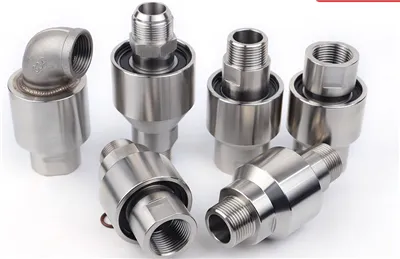
Hydraulic Rotary Swivel Joint
Hydraulic swivel joints, also known as rotating joints or unions, are mechanical devices that allow uninterrupted fluid transfer under high pressure while facilitating rotation.
Shandong HanGe Sealing Technology Co., Ltd is affiliated with HanGe Group, which focuses on the "Rotation & Sealing" industry. The main products are Rotary Joints (Rotary Unions, Rotating Unions), Swivel Joints, Flexible Metal Hoses etc.
We have a professional import and export company (Shandong HanGe Import and Export Trade Co., Ltd) that imports seals for rotary joints and exports the rotary joints we produce all over the world.
Why Choose Us
One-stop Solution
We are committed to becoming a "supermarket" in the rotary joint industry, producing and supplying various types of rotary joints for different purposes. You can find any rotary joint you need and make a one-stop purchase.
High Quality
Steel industry, papermaking, packaging, plastics, printing and dyeing, rubber, chemical fiber, printing, aviation, glass, drying, cigarette, mining, electricity, petroleum, chemical, pharmaceutical, food, construction and other industries.
Production Equipment
Vertical Machining Center, CNC Lathe, Radial Drilling Machine, Grinding Machine, Hydraulic Press Machine.
Production Market
United States, Italy, Thailand, Bulgaria, Mexico, United Arab Emirates, South Africa, Russia, Iran, Chile etc.

The lifespan of water-use rotary joints, also known as water swivel joints or rotating unions, is a critical consideration for industries that rely on these devices to facilitate the efficient and leak-free transfer of water between stationary and rotating components.

As a key connection component in industrial equipment, the thermal oil rotary joint functions to achieve a stable, sealed and leak-free transmission of thermal oil between the rotating part of the equipment and the fixed part.

Rotary joint is a kind of equipment widely used in industrial field. In the normal course of operation, it will constantly rotate and make contact with other equipment or components, resulting in friction.

The sealing structure of the rotary joint is its core component, which directly determines the sealing performance, working life and adaptability to various working conditions of the joint.

The material of the rotary joint is generally considered according to the nature of the medium, the use environment and the working pressure.

Hot oil rotary joint is a kind of rotary sealing device widely used in the field of heat conduction, which can be used to rotate and connect different directions of pipeline system under the working condition of hot oil medium.

In the process of modern industrial production and mechanical equipment operation, rotary joints, rotary joints and hydraulic slip rings play an indispensable role as important connection and transmission components.

The utilization of rotary joints, also known as swivel joints or rotating unions, in gate valves is a practical application that significantly enhances the functionality and efficiency of these crucial industrial components.

As a key fluid transmission device, rotary joint is widely used in various industrial equipment, its main function is to realize the continuous and stable transmission of various flow media when the equipment parts are relative rotating motion.
What Is Hydraulic Rotary Swivel Joint?
Hydraulic swivel joints, also known as rotating joints or unions, are mechanical devices that allow uninterrupted fluid transfer under high pressure while facilitating rotation. Imagine the ability to rotate a device, a part, a sub-system, an entire equipment, or even a pipeline, all while simultaneously facilitating the unhindered flow of a fluid. That's exactly what these joints enable.
At the core of any hydraulic swivel joint, there exist two components, namely the input component and the output component. The function of the input is to uphold the reception of fluid, while the output component models this received fluid to a pathway creating rotation. Maintaining a secure connection between these facets irrespective of the ongoing rotational mechanism is one of the fundamental aspects of the functionality of these joints.
Benefits of Hydraulic Rotary Swivel Joint
Durability
Constructed with robust materials, like carbon steel or stainless steel, hydraulic swivel joints can withstand the prolonged rigors of intensive usage. The tenacious build ensures high levels of wear resistance, making them ideal for applications that encounter frequent or continuous movement, supporting long-lasting performance.
Pressure Resistance
Hydraulic swivel joints are designed to endure high pressure- a necessity for many hydraulic systems. As pressure intensifies, the joint's strength remains unaffected, providing secure and reliable operation throughout its operation. This high-pressure resistance feature maintains the efficiency of both the joint itself and the equipment it is integrated with.
Flexibility
The joint facilitates smooth unidirectional or bidirectional rotation while maintaining fluid transfer. These rotating abilities grant versatility in motion to various equipment, helping prevent eventual stress failure, twists, or line ruptures.
Ease of Maintenance
Maintaining hydraulic swivel joints is relatively straightforward, due in part to their design and material choice. With proper care, timely inspections, and replacements of worn components like seals, these joints can provide consistent performance over time.
Type of Hydraulic Rotary Swivel Joint
Ball Joints
Description: Ball joints feature a spherical bearing that allows for rotational movement in every direction, making them ideal for applications requiring a high degree of flexibility. The ball-and-socket design facilitates fluid transfer while accommodating angular and axial misalignments.
Importance and Unique Features: The primary advantage of ball joints lies in their ability to maintain a leak-proof seal even when subjected to angular displacement.
Rotary Unions
Description: Rotary unions, a broader category into which many rotary joints fall, are designed to transfer fluid under pressure or vacuum from a stationary inlet to a rotating outlet. These can be single or multi-passage, allowing for the transfer of multiple media types through a single joint.
Importance and Unique Features: The capability to handle various media types simultaneously without cross-contamination makes rotary unions indispensable in complex machinery.
Swivel Joints
Description: Swivel joints are designed to support a high degree of rotation and bending. They are typically used where a full 360-degree rotation is necessary, absorbing and releasing torsional stress that could damage the hose or pipeline.
Importance and Unique Features: Their robustness against torsional forces makes swivel joints particularly useful in applications involving movable hoses and pipelines, such as in fuel truck hoses and water treatment plants.
The materials used in constructing hydraulic rotary swivel joint are meticulously selected based on the type of application, environmental conditions, and the nature of the hydraulic fluid used in the operations. The fact that these joints are often subjected to intense mechanical stress and a range of environmental conditions necessitates the usage of robust and resistant materials. Commonly, three primary materials are used in the manufacturing of hydraulic rotary swivel joint, carbon steel, stainless steel, and brass.
Carbon Steel: A commonly used material due to its excellent durability and high resistance to wear and tear. Carbon steel swivel joints are typically used in heavy-duty applications where the joints are subjected to intense pressures and usage.
Stainless Steel: Exhibiting superior resistance to corrosion and chemical damages, stainless steel is another preferred choice for hydraulic rotary swivel joint. The material offers high strength and durability, making it an ideal choice for applications involving corrosive fluids or exposure to harsh environmental conditions.
Brass: Appreciated for its natural corrosion resistance, brass hydraulic rotary swivel joint are generally utilized in applications where lower pressures are involved, or there's a requirement for superior resistance against corrosive or saline environments.
To ensure the sealing function of these joints is not compromised during rotation, they integrate seals crafted from materials like Viton, Nitrile, or PTFE (Polytetrafluoroethylene). Each type of seal material is designed to cater to certain operational prerequisites, such as resistance to specific pressure ranges, temperatures, and chemical compatibility.
What Are Hydraulic Rotary Swivel Joint Used For?
Maritime Industry
Swivel joints are pivotal in operations involving the loading and offloading of liquid cargo in maritime applications. These can transfer fluids (like oil or liquefied natural gas) between the dock and the ship, enabling continuous flow even as the ship moves with tides and currents.

Manufacturing Industry
In the manufacturing sector, these joints find use in many machines, such as hydraulic presses, injection molding machines, forging machines, etc. They facilitate fluid flow for operations and enable part movement where needed.
Agriculture
They're an integral part of irrigation systems and agricultural machinery. In sprinklers, for example, swivel joints enable continuous water flow while letting the sprinkler rotate, providing even water distribution.
Oil and Gas Industry
They're critical in drilling operations, allowing the drill to rotate while pumping drilling fluid. Also, in both oil and gas extraction and refining operations, they facilitate critical fluid transfer.
Detailed Step-By-Step Instructions On How Hydraulic Rotary Swivel Joint
Connection to Systems
The rotary joint is first connected to the stationary fluid supply and the rotating machinery. This setup ensures a secure pathway for fluid transfer into the rotating part.
Fluid Entry
As the system is activated, fluid enters the rotary joint from the stationary supply line. It is directed towards the rotating interface, where the transfer will occur.
Sealing and Rotation
The fluid reaches the core of the rotary joint, where a precisely engineered seal allows the rotating part to move freely while maintaining a leak-proof connection. The seal's design is paramount, using materials and shapes suited to the fluid's characteristics and the system's operating conditions.
Fluid Transfer
Through the sealed interface, the fluid moves into the rotating part. This movement is facilitated by the design of the rotary joint, which accounts for the dynamic balance of forces to ensure smooth, uninterrupted fluid flow.
Delivery to Rotating Machinery
Once inside the rotating component, the fluid performs its intended function-be it cooling, heating, lubricating, or transferring hydraulic power.
Fluid Exit (if applicable)
In systems designed for continuous fluid circulation, the used fluid exits the rotating machinery and often passes back through the rotary joint to return to the reservoir or be expelled from the system.
Continuous Operation
Throughout operation, the rotary joint ensures consistent fluid transfer, accommodating any axial, radial, or angular misalignments between the stationary and rotating parts. This capability is critical for maintaining system efficiency and preventing wear on the components.
Working Pressure
Hydraulic rotary swivel joint are designed to handle a vast gamut of pressure, with some models capable of functioning at pressures up to 6000 PSI (pound-force per square inch). This high-pressure handling capability is crucial in several heavy-duty applications like excavators, cranes, and drilling equipment. The ability to sustain heightened pressure indicates the extent and intensity of operations the joint can support, which is predominantly a determinant of the joint's durability and its compatibility with machinery types.
Ambient Operating Temperatures
Hydraulic rotary swivel joint can endure a wide spectrum of temperatures, usually operating efficiently in ambient conditions ranging from -40 degrees Celsius to 200 degrees Celsius. This broad operational temperature range implies that these joints can function flawlessly in extreme cold and hot environments. Thus, whether it's used in heavy machinery operating in frigid zones or steering systems of vehicles under scorching conditions, the joint can continually function unaffected, maintaining the fluid flow and rotational mechanism.
Sizes
Hydraulic rotary swivel joint come in a diversity of sizes, from as small as 1/8 inch to as large as 10 inches. The corresponding size selection is influenced by the volume and speed of fluid that needs to be transferred, in addition to the operating pressure. Smaller-sized joints usually find their place in lesser-intensity operations, whereas larger ones are preferred for heavy-duty and industrial-scale applications. The size often correlates with the pressure-handling capacity and determines the flow rate of the fluid the joint can support.
Medium Compatibility
Hydraulic rotary swivel joint are highly versatile due to their potential to transfer a wide variety of mediums. They are compatible with a variety of hydraulic fluids including oil, steam, water, and even gases. This feature plays a pivotal role in determining the type of machinery or equipment the joint can be integrated into. For instance, a joint that can transfer steam might be apt for systems involved in heating processes, while one facilitating oil transfer can find its place in automotive or industrial machinery.
Maintenance and Cleaning of Hydraulic Rotary Swivel Joint
Regularly inspecting the hydraulic rotary swivel joint is the first step toward efficient maintenance. Check for any signs of wear, visible damages, or leakage that can indicate potential issues. Make sure the joint is operating within its specified ranges-pressure, temperature, and rotational speed.
The seals in a hydraulic swivel joint are vulnerable to wear and tear over time. Regularly inspect the condition of these seals and replace them if any sign of wear out or damage is evident. Always use replacement seals recommended by the manufacturer to ensure compatibility and proper functioning.
Always operate the hydraulic system with clean hydraulic fluid that's free from debris or pollutants. Contaminated fluid can degrade the internal components of the swivel joint. Periodically changing the hydraulic fluid according to the manufacturer's guidelines is a good practice to limit contamination.
Periodic lubrication is crucial for the smooth operation of swivel joints. Lubricating the joint reduces the friction between its moving parts, minimizing wear and tear that may occur over time. It is necessary to follow the manufacturer's guidelines for lubrication frequencies and lubricant type to avoid any adverse effects.
Regularly clean the outer surface of the hydraulic swivel joint to remove any built-up dust, debris, or grime. Make sure to follow the manufacturer's recommendations, ensuring that you don't damage any critical parts while cleaning.
Our Factory
Shandong HanGe Sealing Technology Co., Ltd is affiliated with HanGe Group, which focuses on the "Rotation & Sealing" industry. The main products are Rotary Joints (Rotary Unions, Rotating Unions), Swivel Joints, Flexible Metal Hoses etc.


FAQ
Q: How does a hydraulic rotary joint work?
Q: What is the function of a hydraulic swivel?
Q: What happens if you run a hydraulic pump backwards?
Q: What is the hydraulic rotary method?
Q: How to remove a hydraulic swivel fitting?
Q: What is hydraulic system for rotation?
Q: How is rotary motion achieved by using a hydraulic power unit?
Q: What will ruin a hydraulic system?
Q: What is one thing you should not do during operation of a hydraulic system?
Q: What happens when you deadhead a hydraulic pump?
Q: How does a hydraulic swivel work?
Q: How tight do you tighten hydraulic fittings?
Q: Which fluid Cannot be used in hydraulic systems?
Q: Can you use water instead of hydraulic fluid?
Q: How does a hydraulic coupler work?
Q: What will ruin a hydraulic system?
Hot Tags: hydraulic rotary swivel joint, China hydraulic rotary swivel joint manufacturers, factory, rotary union for chemical machines, rotary union for beverage processing machines, rotary union for cutting machines, equipment rotary union, rotary union for conveying, rotary union for nuclear power machines




Send Inquiry
