

How to evaluate the after - sales service of an air rotary joint supplier?
Nov 26, 2025
In the highly competitive industrial market, the after - sales service of an air rotary joint supplier plays a crucial role in maintaining customer satisfaction and loyalty. As an air rotary joint supplier, I understand the significance of providing top - notch after - sales support. In this blog, I will share some key aspects on how to evaluate the after - sales service of an air rotary joint supplier.
Responsiveness
One of the most important factors in evaluating after - sales service is the supplier's responsiveness. When customers encounter problems with our air rotary joints such as the GC003S Air Rotary Joint, they expect a quick response. A supplier should have a well - defined communication channel, whether it is a dedicated hotline, an email support system, or an online chat service.
The time it takes for the supplier to acknowledge a customer's inquiry is a clear indicator of their responsiveness. Ideally, the supplier should respond within 24 hours for non - urgent issues and within a few hours for urgent matters. For example, if a customer reports a leakage problem in an air rotary joint during production, a prompt response can prevent costly production downtime.
Another aspect of responsiveness is the ability to provide on - site support when necessary. Some complex problems may require a technician to visit the customer's facility. A good supplier should be able to dispatch a technician within a reasonable time frame, depending on the location and the nature of the problem.
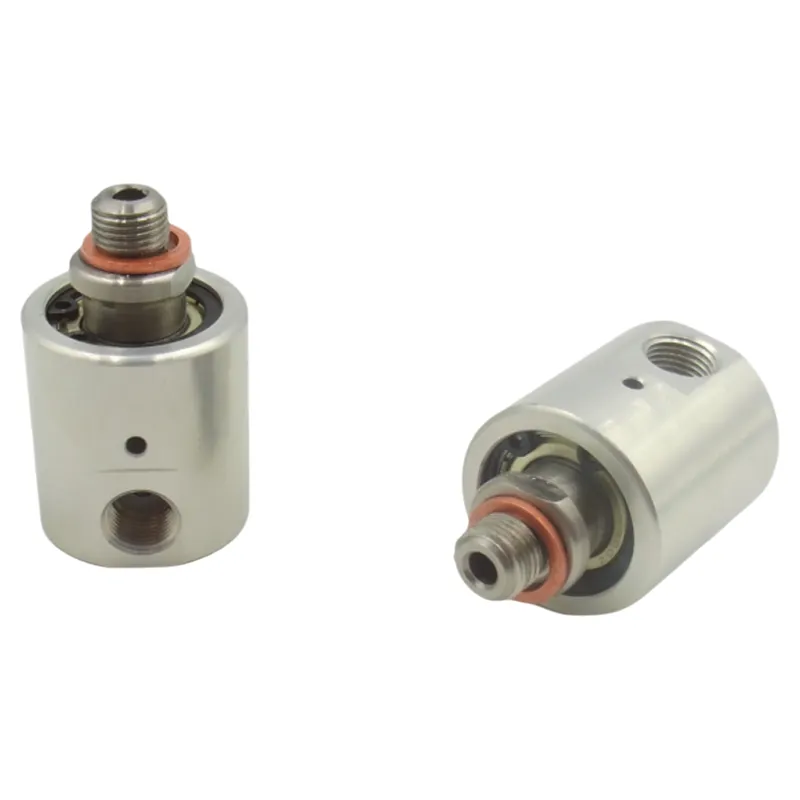

Technical Expertise
Technical expertise is essential for an air rotary joint supplier to provide effective after - sales service. The support team should have in - depth knowledge of different types of air rotary joints, including Multi Passage Rotary Joint and Rotary Air Joint. They should be able to diagnose problems accurately and provide appropriate solutions.
For instance, when a customer complains about abnormal noise in an air rotary joint, the support team should be able to identify whether it is due to a bearing issue, misalignment, or other factors. They should also be familiar with the installation, operation, and maintenance procedures of the products. This knowledge allows them to offer comprehensive advice to customers, such as how to properly install a new air rotary joint or how to perform routine maintenance to extend its lifespan.
Moreover, a supplier with strong technical expertise can keep up with the latest industry trends and technological advancements. They can provide customers with upgrades and improvements for their existing air rotary joints, enhancing the performance and efficiency of the equipment.
Spare Parts Availability
The availability of spare parts is a critical factor in after - sales service. In the event that a component of an air rotary joint fails, having access to the necessary spare parts quickly can minimize downtime. A reliable supplier should maintain an adequate inventory of commonly used spare parts for different models of air rotary joints.
This inventory management should be based on accurate demand forecasting. By analyzing historical sales data and market trends, the supplier can ensure that they have the right amount of spare parts in stock. For example, if a particular type of seal is frequently replaced in a certain model of air rotary joint, the supplier should keep a sufficient quantity of these seals on hand.
In addition to having spare parts in stock, the supplier should also be able to source hard - to - find or specialized parts in a timely manner. They may have partnerships with manufacturers or distributors to obtain these parts quickly when needed.
Warranty Policy
A clear and comprehensive warranty policy is an important part of after - sales service. It provides customers with a sense of security and confidence in the product. A good supplier should offer a reasonable warranty period for their air rotary joints. The length of the warranty can vary depending on the product type and quality, but generally, it should be at least one year.
The warranty policy should clearly define what is covered and what is not. For example, it may cover defects in materials and workmanship, but exclude damage caused by improper use or maintenance. The supplier should also have a straightforward process for customers to claim warranty service. This may involve submitting a claim form, providing proof of purchase, and having the defective product inspected by the supplier.
During the warranty period, the supplier should be responsible for repairing or replacing the defective air rotary joint at no cost to the customer. This includes the cost of parts, labor, and shipping.
Customer Feedback and Follow - up
Customer feedback is a valuable source of information for evaluating after - sales service. A supplier should actively seek feedback from customers after providing after - sales support. This can be done through surveys, phone calls, or online reviews. By listening to the customers' opinions, the supplier can identify areas for improvement and make necessary adjustments to their service.
For example, if a customer complains about the long wait time for a technician to arrive, the supplier can review their dispatch process and find ways to reduce the response time. Similarly, if customers frequently mention that they are confused about the warranty policy, the supplier can improve the clarity of the policy and provide better communication to customers.
Follow - up is also an important part of the after - sales process. After resolving a customer's problem, the supplier should follow up to ensure that the issue has been completely resolved and that the customer is satisfied with the service. This shows that the supplier cares about the customer's experience and is committed to providing high - quality service.
Training and Education
A supplier can enhance their after - sales service by providing training and education to customers. This can include on - site training for installation, operation, and maintenance of air rotary joints. By training the customers' staff, the supplier can ensure that the products are used correctly, which can reduce the likelihood of problems occurring.
In addition to on - site training, the supplier can also offer online resources such as video tutorials, user manuals, and technical guides. These resources are accessible to customers at any time, allowing them to learn about the products at their own pace. For example, a customer can watch a video tutorial on how to replace a seal in an air rotary joint before attempting to do it themselves.
Cost - effectiveness
While high - quality after - sales service is important, it should also be cost - effective. A supplier should offer competitive pricing for their after - sales services, including repair, maintenance, and spare parts. They should be transparent about their pricing structure, clearly stating the cost of labor, parts, and any additional fees.
Customers are often looking for a balance between quality service and reasonable cost. A supplier that can provide cost - effective after - sales service can gain a competitive edge in the market. For example, by optimizing their internal processes and reducing overhead costs, the supplier can offer lower prices for spare parts and repair services without sacrificing quality.
Conclusion
Evaluating the after - sales service of an air rotary joint supplier involves considering multiple factors, including responsiveness, technical expertise, spare parts availability, warranty policy, customer feedback, training, and cost - effectiveness. As an air rotary joint supplier, I am committed to providing excellent after - sales service to our customers. We understand that a satisfied customer is more likely to become a repeat customer and recommend our products to others.
If you are in the market for air rotary joints or need after - sales support for your existing equipment, we invite you to contact us for a detailed discussion. Our team of experts is ready to assist you with all your air rotary joint needs.
References
- Industry standard manuals for air rotary joints
- Case studies on after - sales service in the industrial equipment sector
- Market research reports on customer satisfaction with air rotary joint suppliers