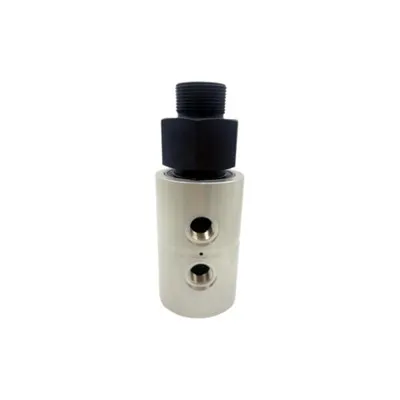
Rotary Joint Material Selection Guide
Aug 08, 2025
Common materials can be categorized as follows
Metal Materials
Main Body or Core Contact Components

Stainless Steel
(304, 316, 316L): Offers strong corrosion resistance (316/316L > 304), high strength. Suits water, steam, weak acids/alkalis, food-grade fluids; used in chemical, food sectors.
Carbon Steel
Low-cost, high-strength but rust-prone. For dry gases, non-corrosive liquids (e.g., lubricants), normal temp/pressure; needs rust prevention with regular maintenance.


Brass
Good thermal conductivity and moderate corrosion resistance. Fits low-temp, low-pressure fluids (cooling water, compressed air).
Aluminum Alloy
Lightweight, corrosion-resistant, ideal for light industry/weight-sensitive scenarios. Poor strength and high-temp resistance; avoid high pressure/temps.

Non-Metal Materials
Seals/Auxiliary Parts
PTFE
Plastic king" with extreme chemical resistance, low friction, non-stick surface (-200~260℃). Used as seals/bushings for strong acids/alkalis (hydrofluoric acid) and high-purity fluids.
Rubber
NBR: Oil-resistant, for petroleum media (-40~120℃).
FKM/Viton: High-temp (-20~200℃) and chemical resistance; suits high-temp steam, strong solvents.
VMQ: Resists wide temps (-60~200℃), non-toxic; for food-grade, high-temp water/steam
Ceramic
We offer a variety of transmission components, including sprockets, roller chains, gears, couplings, racks, hubs, pulleys, taper sleeves, bearing seats, and more.
Professional
Withstands ultra-high temps (>2000℃), self-lubricating, corrosion-resistant (except strong oxidants). Excellent for high-temp seals (steam turbines, smelting).

Low-cost, moderately wear-resistant; fits low-speed, normal temp, non-corrosive scenarios (mechanical lubrication systems).